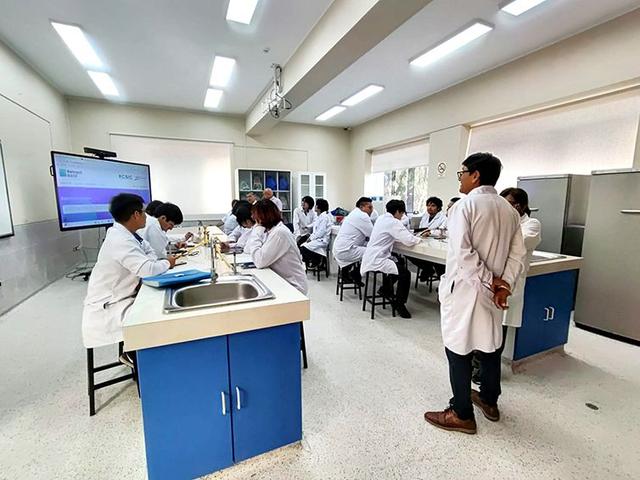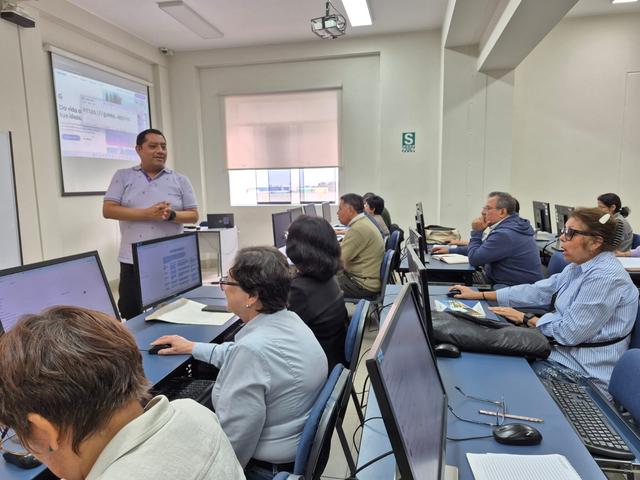
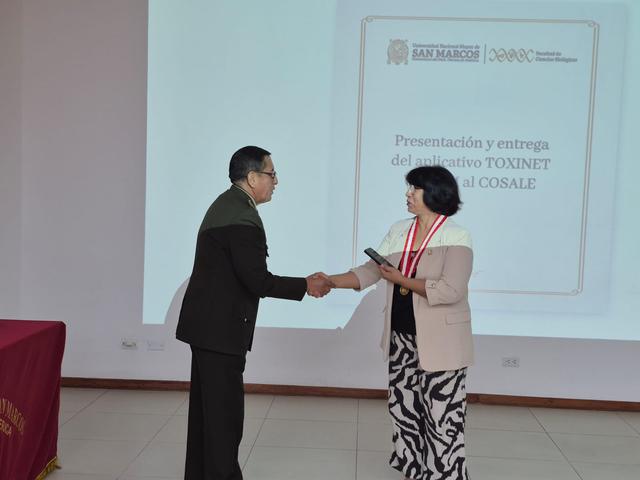
Facultad de Ciencias Biológicas UNMSM entrega aplicativo ToxiNet al Comando de Salud del Ejército para apoyar la identificación de serpientes venenosas
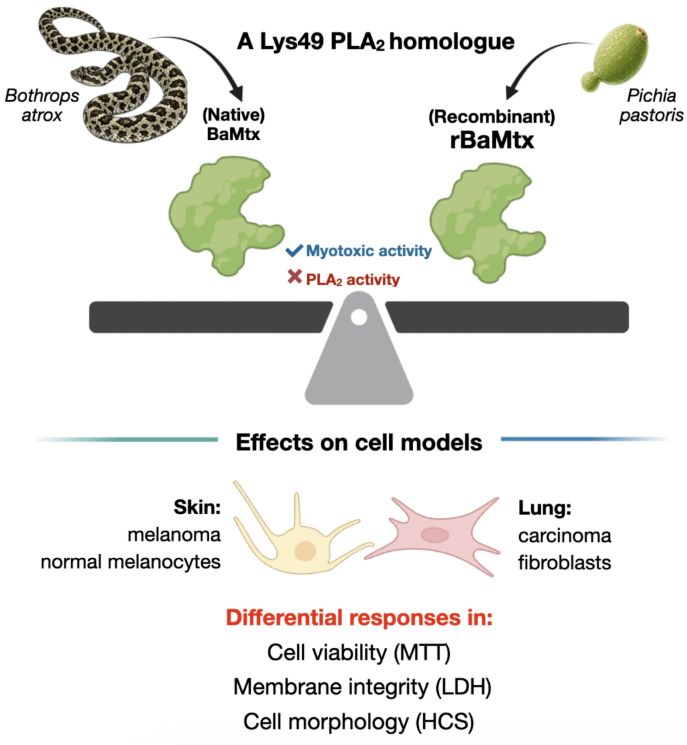
Artículo científico | Recombinant BaMtx Preserves the Biological Properties of a Lys49 Phospholipase A2 from Bothrops atrox and Reveals Differential Responses in Tumor and Non-Tumor Cell Models
Revista: Toxins
DOI: https://doi.org/10.3390/toxins18080338
Autores: Daniel Torrejón , Angie Regalado, Alex Proleón , Víctor Otárola, Fanny Lazo, Edith Rodríguez , Erasmo Colona-Vallejos , Libertad Alzamora-Gonzales , Jherson Cisneros-Gutierrez, Jacquelyne Zarria-Romero, Miryam Paola Alvarez Flores , Renata Nascimento Gomes, Thatiana Corrêa de Melo, Ronnie G. Gavilan, Javier Cárdenas Tenorio , Félix A. Urra, Dan E. Vivas-Ruiz y Armando Yarlequé.
Profesores de la FCB: Fanny Lazo, Edith Rodríguez, Erasmo Colona, Libertad Alzamora, Jacquelyne Zarria, Dan Vivas y Armando Yarlequé.
Abstract:
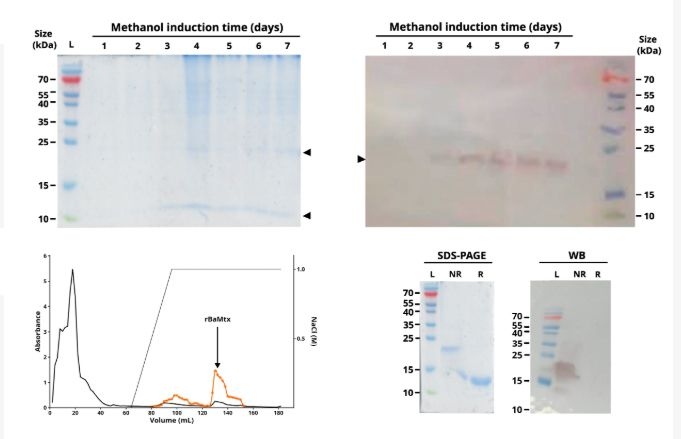
Lys49 phospholipase A2 (Lys49-PLA2) homologues are catalytically inactive snake venom toxins with diverse biological activities, but their functional characterization requires recombinant production strategies to overcome the limitations inherent to native venom-derived proteins. Here, we produced recombinant BaMtx (rBaMtx), a Lys49-PLA2 homologue from Bothrops atrox, in the Pichia pastoris KM71 expression system and evaluated whether its biochemical and biological properties were preserved. rBaMtx was secreted into the culture medium, purified by cation-exchange chromatography, and characterized by SDS-PAGE, Western blotting, RP-HPLC (85.9% purity), and MALDI-TOF mass spectrometry, confirming a molecular mass of 13,821 Da. Despite lacking PLA2 activity, rBaMtx retained pronounced myotoxicity in vivo, inducing dose-dependent plasma creatine kinase release and skeletal muscle damage comparable to or greater than native BaMtx. In vitro, rBaMtx reduced viability of murine 4T1 breast carcinoma cells (IC50 = 60.94 µg/mL), altered cell morphology, modestly increased IL-1β release, and produced context-dependent effects in paired human tumor and non-tumor cell models, differing from native BaMtx and crude venom. These findings establish rBaMtx as a reproducible model for investigating the mechanisms and biomedical potential of catalytically inactive Lys49-PLA2 homologues.