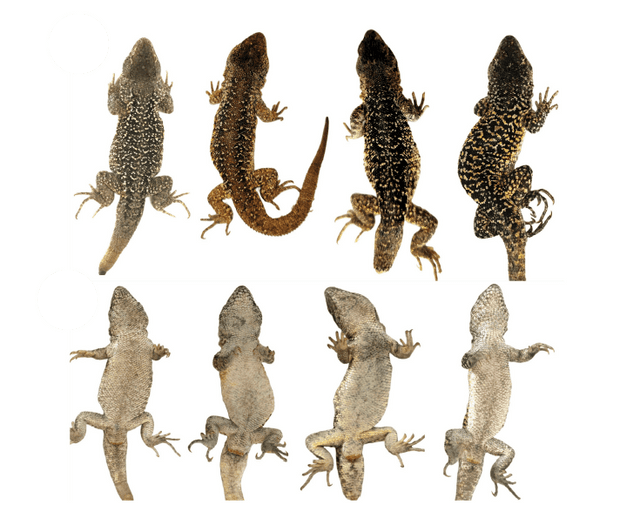
Nueva publicación científica: Avances en la delimitación de especies de lagartijas altoandinas y descripción de una nueva especie
Artículo científico | Evidence for Countergradient Growth Adaptation and Jordan's Rule in a Southern Hemisphere Fish, the Atherinopsid Odontesthes regia.
Revista: Ecology and Evolution.
DOI: https://doi.org/10.1002/ece3.74084
Autores: Hannes Baumann, Cristian Gallardo-Escárate, Zofia A. Baumann, Miguel Araya, Cristian Azocar, Victor Aramayo, Marcelo E. Oliva, Mauricio A. Urbina.
Profesor de la facultad: Victor Aramayo.
Abstract:
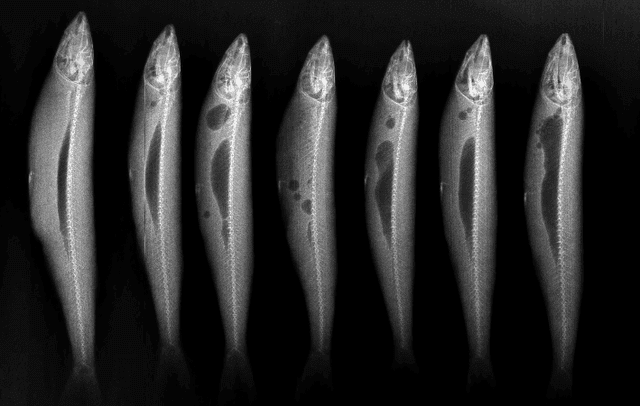
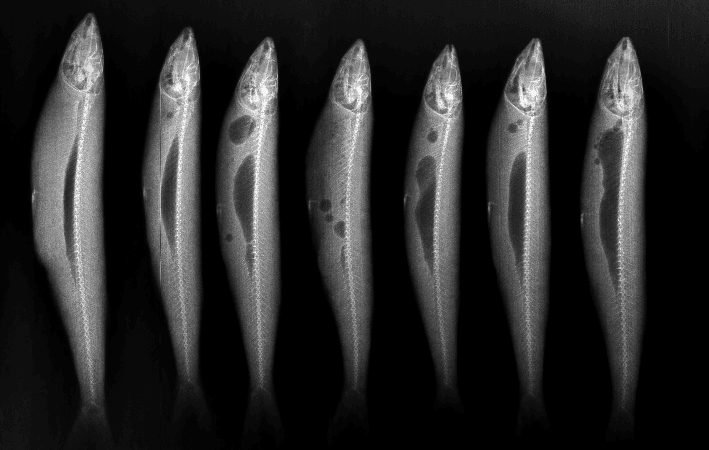
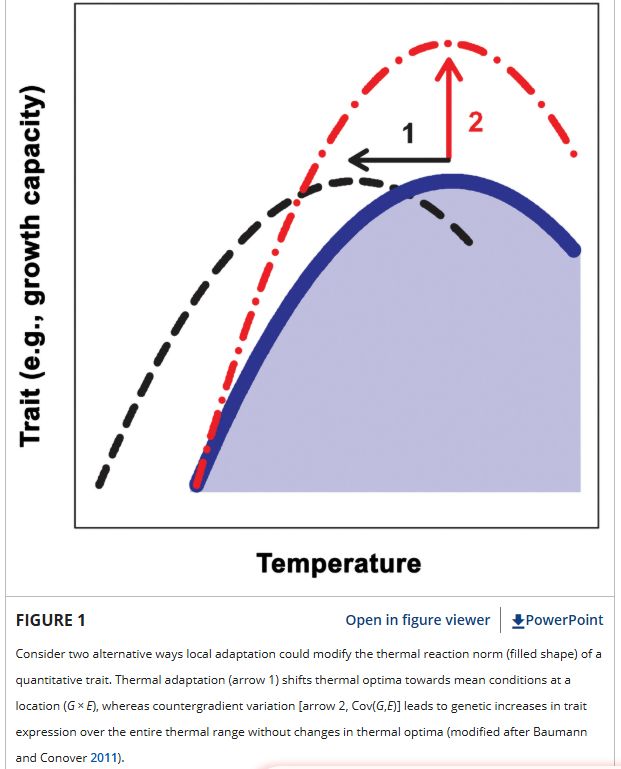
We studied thermal growth reaction norms in larval/juvenile sea silversides (Odontesthes regia) from different populations along the Humboldt marine large ecosystem off the Chilean coast (20–41° S, ~2333 km), using a common garden approach. Two independent trials (years) consistently showed that offspring from a more northern, low latitude population (Iquique, 20° S) grew significantly slower than their conspecifics from a southern, higher latitude population (Dichato, 37° S) across all tested temperatures (14°C–23°C). This suggests that O. regia evolved countergradient growth variation, a form of local adaptation that works by accumulating faster-growing genotypes in southern populations to counteract the negative phenotypic growth effects of higher-latitude temperature conditions. Similar patterns have been found in Northern hemisphere fishes, particularly in silversides (Atherinopsidae), but to our knowledge, O. regia is the first documented case of countergradient growth adaptation in a Southern Hemisphere fish. The experiments also revealed consistent population differences in the length of hatchlings and early larval survival at low temperatures. In addition, we showed that fish from Peru and northern Chile (9–20° S) have approximately two fewer vertebrae than their conspecifics from south-central Chile (24–41° S), indicating cogradient variation known as Jordan's Rule in fishes. The ubiquity of co- and countergradient variation worldwide suggests that these principles are broadly applicable to climate adaptation not only in space, but by inference also in time, thereby informing how organisms may evolve under global climate change.
Últimas noticias