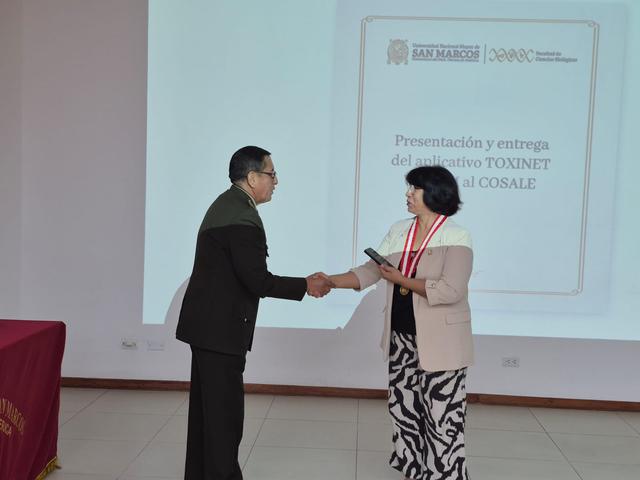
Facultad de Ciencias Biológicas UNMSM entrega aplicativo ToxiNet al Comando de Salud del Ejército para apoyar la identificación de serpientes venenosas
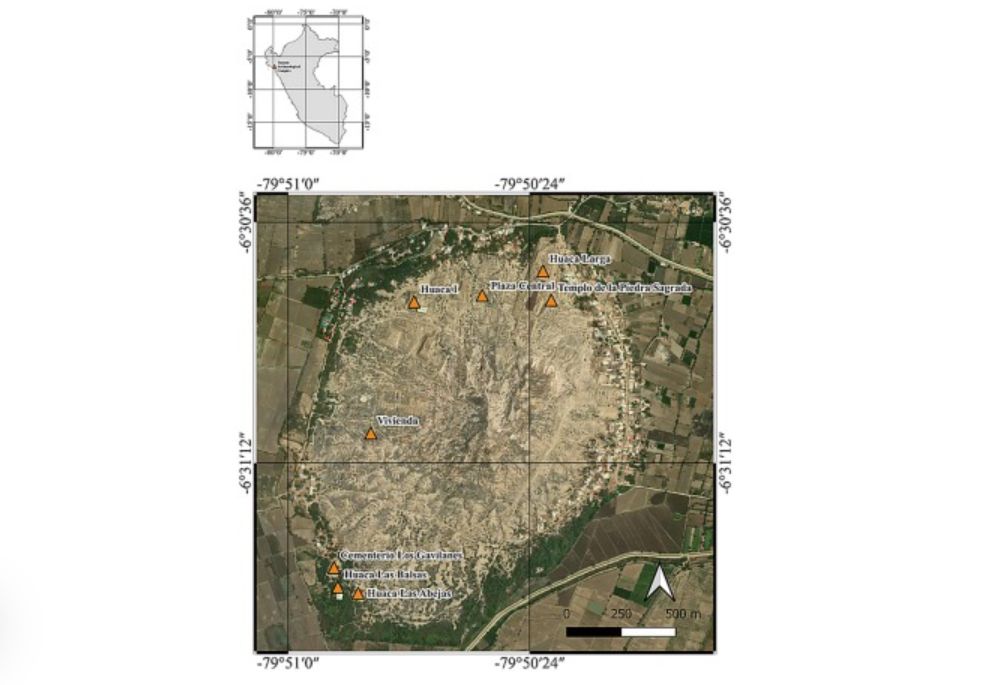
Artículo científico | Archaeogenomic identification of ancient plant and feather remains from Túcume, Peru
Revista: Journal of Archaeological Science: Reports
DOI: https://doi.org/10.1016/j.jasrep.2026.105979
Autores: Juan Esteves, Renato D. La Torre Ramirez, Jacqueline Hernández, Alejandra Arana, Jaime Morin-Lagos, Sarah L.F. Martin, José M. Capriles, Letty Salinas, Alfredo Narváez, Bernarda Delgado, César Arana, Michael D. Martin.
Profesores de la FCB: Letty Edith Salinas Sánchez, César Augusto Arana Bustamante.
Abstract:
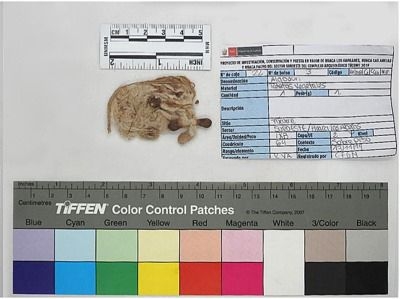
The recovery of ancient DNA (aDNA) from non-mineralized archaeological materials remains a major methodological challenge, particularly in tropical and semi-arid environments where high temperature and humidity accelerate molecular degradation. We evaluated the feasibility of extracting, authenticating, and identifying aDNA from feathers and plant remains recovered at the Túcume Archaeological Complex, a major Lambayeque and later Inca administrative and ceremonial center on the northern coast of Peru. A total of 201 archaeological subsamples (126 feathers and 75 plant remains) were processed in a dedicated aDNA laboratory under strict contamination controls. DNA extraction followed protocols optimized for aDNA extraction, shallow shotgun sequencing data was generated, and metagenomic pipelines were used to assess authenticity and taxonomic assignment. DNA was retrieved from both avian and plant materials, showing highly fragmented molecules and, in some cases, characteristic deamination patterns consistent with aDNA. Although endogenous DNA content was generally low, in many cases it was sufficient for molecular classification in a subset of samples. Initial classifications were obtained for approximately 40 % of feather samples and 36 % of plant samples, with most assignments restricted to higher taxonomic levels (order or family). The recovery of authentic DNA from such challenging substrates demonstrates the methodological viability of archaeogenomic analysis under tropical-arid conditions, but also emphasizes the current limitations imposed by low endogenous DNA content, shallow sequencing, and incomplete reference databases. This study supports the idea that unconventional biological materials could be included with appropriate caution in future archaeogenomic research in Peru and other tropical regions.