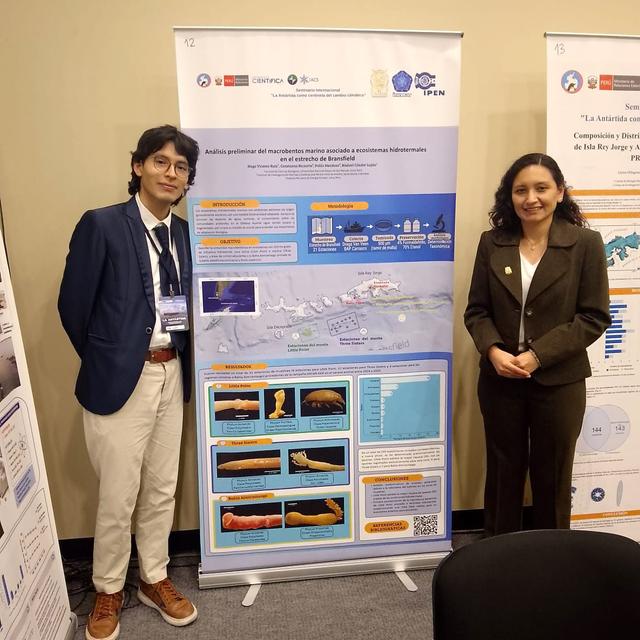
Docente y tesista de la Facultad de Ciencias Biológicas compartieron avances de investigación antártica en seminario internacional
Artículo científico | Phylogenomic and comparative genomic analyses of Aeromonas spp. from South American aquatic systems reveal extensive genomic diversity, antimicrobial resistance, and predicted human pathogenicity
Revista: Frontier Microbiology
Enlace: https://doi.org/10.3389/fmicb.2026.1823138
Autores: Enrique Garcia-Candela, Aarón Mondragón-Martínez, Gerald Moreno-Morales, Milagros Cabrera-Soregui, Víctor Humberto Puicon Niño de Guzmán, Juan C. Ramos Gorbeña, Alcides Guerra Santa Cruz, Lidia Cruz-Neyra, and Julio Solis-Sarmiento
Profesores de la FCB: Aarón Mondragón Martínez y Julio Solis Sarmiento
Abstract:
Introduction: Aquaculture systems function as dynamic ecological interfaces facilitating the circulation of opportunistic pathogens and antimicrobial resistance (AMR) determinants across environmental, animal, and human compartments. Aeromonas spp. are ubiquitous freshwater bacteria and emerging human opportunistic pathogens, yet genomic data from tropical South American aquaculture remain scarce.
Methods: Nine Aeromonas isolates from Amazonian aquaculture facilities in Peru were subjected to whole-genome sequencing. Species identification was performed using Average Nucleotide Identity and phylogenomic reconstruction within a dataset of 112 genomes. Ribosomal MLST, comparative gene content analysis, virulence and resistome profiling, human pathogenicity prediction, and quinolone resistance-determining region (QRDR) screening were conducted. Phenotypic antimicrobial susceptibility testing was performed against five antibiotics.
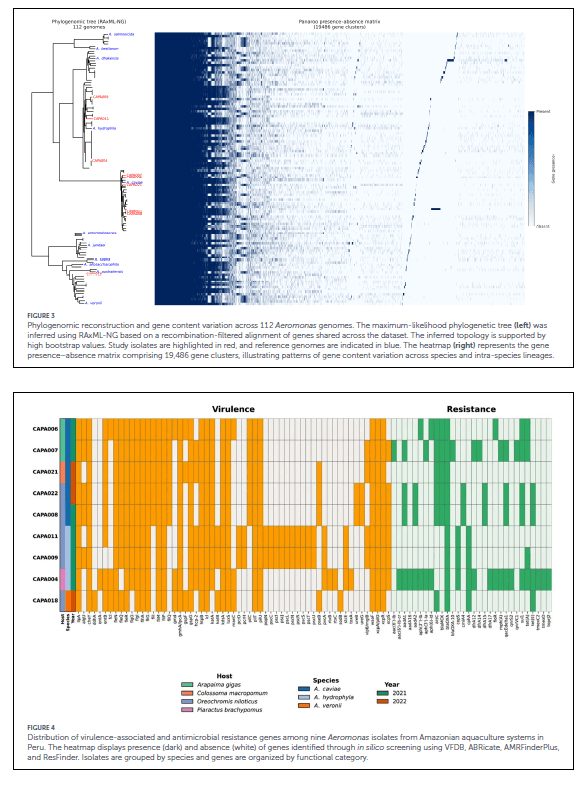
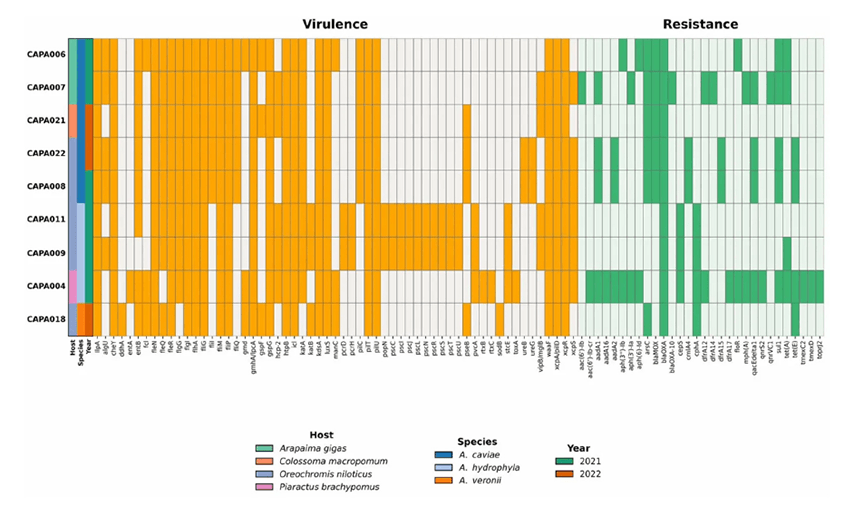
Results: Phylogenomic analysis revealed substantial genetic diversity among the analyzed isolates, encompassing Aeromonas hydrophila, Aeromonas caviae, and Aeromonas veronii, with no clustering by host species or production site. Ribosomal MLST assigned 8 distinct rSTs across the 9 isolates. Comparative genomic analysis identified 19,486 gene clusters, of which a subset was shared across all genomes, while the majority were variably distributed, indicating extensive genomic diversity across Aeromonas spp. All isolates shared conserved colonization- and secretion-associated determinants, whereas major cytotoxic toxin genes were absent. PathogenFinder v2 predicted high probabilities of human pathogenicity (0.93–0.96) across all genomes. Resistome analysis identified genes associated with tetracycline, quinolone, sulfonamide, and β-lactam resistance, including intrinsic blaOXA and cphA, while QRDR screening identified mutations potentially associated with quinolone resistance. Genomic findings were broadly consistent with phenotypic susceptibility profiles.
Conclusion: Amazonian aquaculture systems harbor genetically diverse Aeromonas lineages with conserved opportunistic virulence traits and clinically relevant AMR determinants. These findings highlight the role of aquaculture environments as reservoirs and potential transmission interfaces of antimicrobial resistance and opportunistic pathogens, underscoring the importance of genomic surveillance within a One Health context.